
Drones · Archive
Are DJI Drones Legal in India?
Complete guide on DJI drone legality in India including DGCA compliance, flying permissions, registration, legal risks and continued operation.
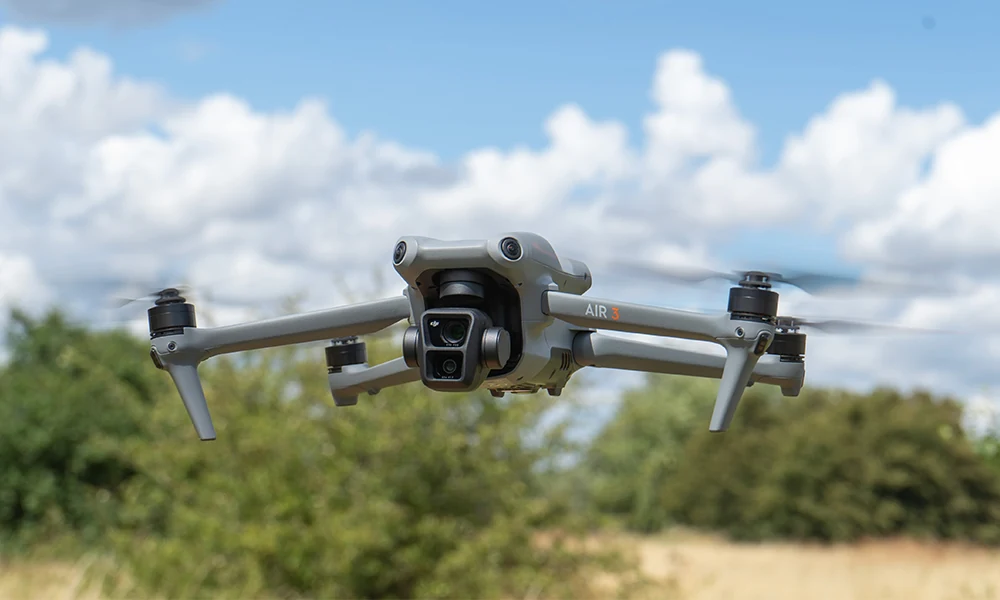
Da-Jiang Innovations Sciences and Technologies Limited (‘DJI’), a Shenzhen, China-based company, accounts for 90% market share in the global consumer market of drones and this market share has shaped public perception and regulatory discourse not only in India but also across multiple jurisdictions worldwide. In the United States, the Federal Communications Commission has barred DJI (and other foreign companies) from importing new drones over concerns pertaining to data transmission & cybersecurity by placing the companies in a Covered List.
In India, concerns relating to national security, data protection and strategic dependence on foreign technology have influenced regulatory decision making. These concerns, when coupled with the government's “Make in India” campaign, have called for a restrictive approach towards the import of foreign drones in India. These policy considerations culminated in the 2022 import restrictions and were reinforced through subsequent regulatory measures, leading to the widespread constraint on imports of DJI and other foreign drones. Against this backdrop, the continued registration and operation of DJI drones on the Digital Sky platform of the Directorate General of Civil Aviation (‘DGCA’) raised important questions regarding the interaction between trade controls and aviation regulation, which this article seeks to examine.
Regulatory Framework governing drone operations in India
The legal regulation of drones in India is founded on the dual framework of aviation safety norms and trade control mechanisms. Under the Drone Rules, 2021 (‘2021 Rules’), drones falling in the category of micro, small, medium and large must be registered on the Digital Sky Platform and shall possess a Unique Identification Number (‘UIN’) issued by DGCA prior to their operation. Operators flying micro, small, medium and large drones are required to obtain a ‘Remote Pilot Certificate’ and manage flight operations keeping in mind green, yellow and red zones. The 2021 Rules is primarily concerned with safety, accountability and airspace management. Registration and licensing are designed to ensure traceability of drones and operators, enable monitoring of flight activity and facilitate enforcement in cases of misuse.
Import controls on Drones
In February, 2022, the Government of India along with Directorate General of Foreign Trade (‘DGFT’) under the regime of foreign trade policy restructured the legal framework governing the import of drones in India by way of notification released on 9 February 2022 (‘DGFT Notification’). The primary features of the import policy imposed prohibition on import of drones in Completely Built Up (‘CBU’), Semi-Knocked Down (‘SKD’), and Completely Knocked Down (‘CKD’) forms, but at the same time the notification placed the import of drone components under the free category i.e. no customs duty is levied on drone components imported into India. The DGFT Notification reflected a deliberate policy choice, where instead of imposing brand-specific or technology-specific prohibition, the government opted for a restricted approach on finished and semi-finished goods, simultaneously promoting domestic value addition. The principal objective of the DGFT Notification relating to imports of foreign drones was to promote domestic manufacturing, reduce strategic dependence and to curb the risks that were posed to national security & data governance.
This policy effectively blocked the commercial import of finished and semi-finished foreign drones into India. Since DJI primarily supplies fully assembled consumer and professional drones, the restriction had an immediate impact on its presence in the Indian market.
However, notwithstanding the restrictions that were placed under the 2022 import policy, DJI drone-units continued to be imported into India and remain in circulation, through multiple informal channels and grey-markets such as personal baggage & passenger imports despite the formal prohibition being in place. Once inside the Indian market, many of these drones entered the formal regulatory system by obtaining registration & issuance of UIN and as a consequence, this process catered to their continued use in the market.
De-registration of drones
On 12 August 2025, the DGFT issued a public notice for Cancellation of Registration of Unmanned Aircraft Systems (UAS) for False Declaration further reiterating and tightening compliance requirements that are applicable to import of drones. The public notice aimed at amplifying the stricter classification and declaratory norms for unmanned aerial vehicles, consequently strengthening the implementation of existing DGFT Notification. Before this notification, almost 25% of the drones which had been issued UINs were DJI drones.
The combined effect of the DGFT Notification and the 2025 public notification reinforcement measures has been the near-total exclusion of DJI drones’ authorised operation in the airspace. For most commercial purposes, lawful procurement of new DJI drones in India has become impractical and when taken from the perspective of users and businesses, the absence of official distributors, licensing hurdles, customs enforcement, and repeated regulatory communications has created the impression of a blanket ban. A product that cannot be legally imported, is effectively treated as prohibited.
In one instance, on 5 November, 2025, the Central Industrial Security Force seized 22 high-end DJI drones at the Hyderabad airport during routine screening of passenger baggage. The seized drones were reportedly brought into India without requisite authorisation and in violation of prevailing import restrictions.
Conclusion
India’s approach towards foreign drones including DJI products are based on customs controls where the DGFT Notification restricted the import of CBU, CKD and SKD drones while the 2025 public notice aimed to reinforce these restrictions with enhanced scrutiny and documentation requirements. Notwithstanding the mechanisms in place, DJI drones still continue to enter the country through informal and fragmented channels, thereby resulting in their sustained presence in the domestic market.
Going forward, it is expected that India’s drone ecosystem will be focused upon domestic manufacturing, enhanced certification systems with stricter oversight mechanisms. With introduction of Draft Civil Drone (Promotion and Regulation) Bill, 2025, the regulatory focus is likely to be intensified with stricter mechanisms for traceability, remote identification and zero tolerance for informal supply chains.